Companies have been using data to make better decisions for a long time, but it is only now that the volume of data generation, computing power and technological advances in data ingestion, and advanced analytics have made it possible to get the most value out of that data.
Advanced analytics is in fact responsible for extracting knowledge from data, making it possible to understand what is happening, accurately predict what will happen in the future, and identify the best business decisions in the face of complex problems.
Data analytics has been the latest technological revolution that has pushed the business world towards a deeper and more real insight into its business and customer behavior, but only by using these insights to their full potential can they make a difference in an increasingly competitive and globalized environment.
The different advanced analytical techniques take into account an infinite amount of data, complex variables, and restrictions that affect the specific problems of the processes to be optimized.
Thanks to advanced analytics we will be able to mainly:
- Improve decision making by using data in a more concrete way.
- Automate processes, saving time and operating costs.
- Achieve greater efficiency by focusing on processes of greater importance to our business.
Types of advanced analytics
Three main types of advanced analytics can be distinguished, and each of them incorporates intelligence into our business at different levels.
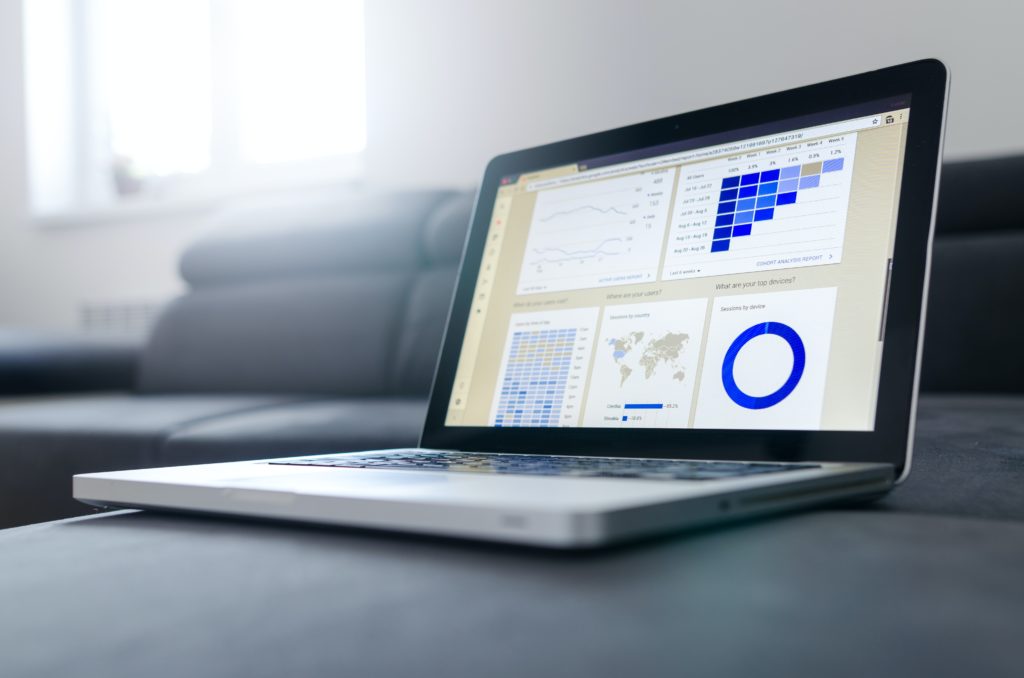
- On the one hand, we have descriptive analytics and diagnostic analytics. These are the most basic component of analytics. This type of analytics shows what has happened or is happening in our business in a way that is easy to understand. Also called Business Intelligence, it analyses historical information to determine what has happened and why, and displays the information in a visual way through dashboards, graphs, etc. Today, most companies rely on Business Intelligence solutions to better understand their business and have more control over their operations.
- Then there is predictive analytics. This type of analytics brings greater value to the business as it is able to predict what will happen in the future. For example, models on sales forecasting, propensity to purchase or analysis of trends and consumption patterns. These types of predictive models are becoming increasingly popular and leading companies are already implementing them to better understand their customers’ behaviour or to anticipate possible demand scenarios. However, having a good prediction does not guarantee making the best decision. This is where prescriptive analytics comes in.
- Prescriptive analytics is what helps us to identify the most appropriate decisions for our business from among all the possible ones. It uses the results obtained from predictive analytics (forecasts, prognoses, trends) to assess all possible options taking into account all variables (costs, limits, constraints, capacities), and selects the most appropriate proposal among all of them, guided by the objectives set. Prescriptive analytics relies on two essential disciplines: business rules management systems and mathematical optimisation algorithms. This set of mathematical techniques and algorithms allows the automation of complex decision making, improving the operational efficiency of the companies that use them. In this changing and competitive market, the application of such prescriptive analytics techniques helps companies to stand out and lead in their markets.
Predictive analytics, therefore, provides answers to what will happen in the future, but prescriptive analytics can help direct our future decisions and make them more favourable to our business.
In short, it is only when different data analytics techniques are used together that the maximum performance and efficiency of a company’s internal processes can be achieved.
Application of advanced data analytics
Advanced analytics can help companies in any sector of activity, such as healthcare, financial services, insurance, manufacturing, transport, logistics or retail, and in areas as diverse as sales, supply chain, production, or human resources, among others.
Predictive analytics can be used for example for:
- Anticipate the demand for a product, allowing better planning of its replenishment.
- Detect a customer’s propensity to purchase a product or service, allowing a more customisable offer to be made, adjusted to their needs and interests.
- Predict equipment breakdowns in the short term based on historical data on their activity, so that asset maintenance can be planned in advance.
- Identify fraudulent operations or patterns of behaviour and non-payments before they happen so that actions can be taken to avoid or mitigate them.
And prescriptive Analytics for:
- Calculate replenishment orders at the optimum time, minimising stock and maximising product availability at all times.
- Automate and optimally plan commercial campaigns in search of the highest efficiency and results.
- Plan preventive maintenance to minimise maintenance costs and maximise the level and quality of service.
- Optimal staff planning to minimise labour costs and maximise the level and quality of service, while taking into account employee satisfaction.
The application of advanced analytical techniques is undoubtedly the great opportunity for companies in all sectors to position themselves against the competition. But also, to face new challenges in an increasingly uncertain, changing, and hyper-connected environment.
At numens, we help you better understand how this powerful technology tool can help you improve the efficiency, agility, and flexibility of your operations.
You can also follow us on social media: Linkedin and Twitter.